

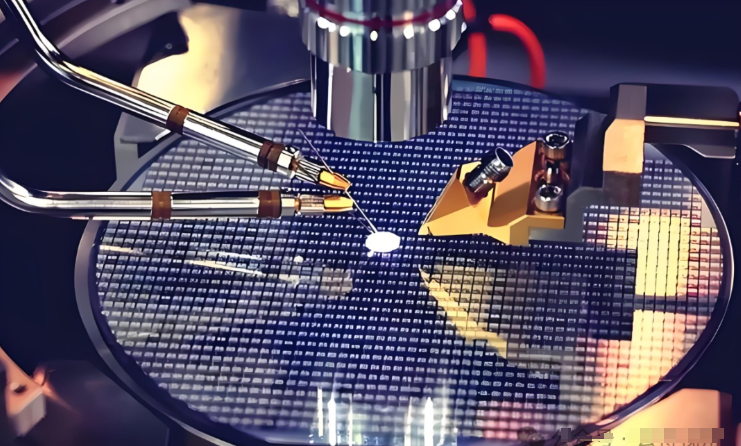
On the fab floor, a wafer that comes out of cleaning with water marks, a photoresist stack that didn’t get baked the way it should, or an encapsulant that cures unevenly doesn’t just burn cycle time—it burns wafers. That’s why infrared heating has to be predictable: tight temperature control, without adding particles or beating up the wafer with thermal stress. What matters, technically We built the post-clean infrared heater around short-wave NIR and a quartz-based thermal design so you get wafer-level uniformity within ±0.1°C. The profile holds steady enough to run photoresist soft bake and hard bake—where temperature accuracy is what keeps critical dimension control and sidewall profile in line. Closed-loop control keeps the thermal budget disciplined, even when you’re ramping fast. The hardware fits Class 1–100 cleanrooms, and the emitters and fixtures are built to generate essentially zero particles. Why it holds up in production One heater handles multiple steps: wafer drying after cleaning, photoresist bakes in lithography, and package curing out in back-end. You get better throughput because it hits setpoint quickly, and you get higher yield because repeatable temperature means fewer defects across lots. Energy use comes down, too—NIR coupling is efficient and the thermal mass stays low. Reliability is baked into the daily grind: the units run 24/7 with low drift, so unplanned downtime and spare inventory don’t pile up. What you need to plan for Installation comes down to matching the tool footprint, plus gas and exhaust hookups, and making sure the PLC interface lines up. Plan on a short commissioning run to tune ramp and soak for your films and substrates. It performs best on standard wafer sizes and flat packages. If you’re running curved or non-standard substrates, you’ll likely need a custom fixture to keep uniformity where it needs to be.